TPO Roofing
Heat-welded seams, reinforced details and attachment form a connected single-ply system.
Explore this serviceRoof repair, restoration and replacement decisions built around the system and the building in use.
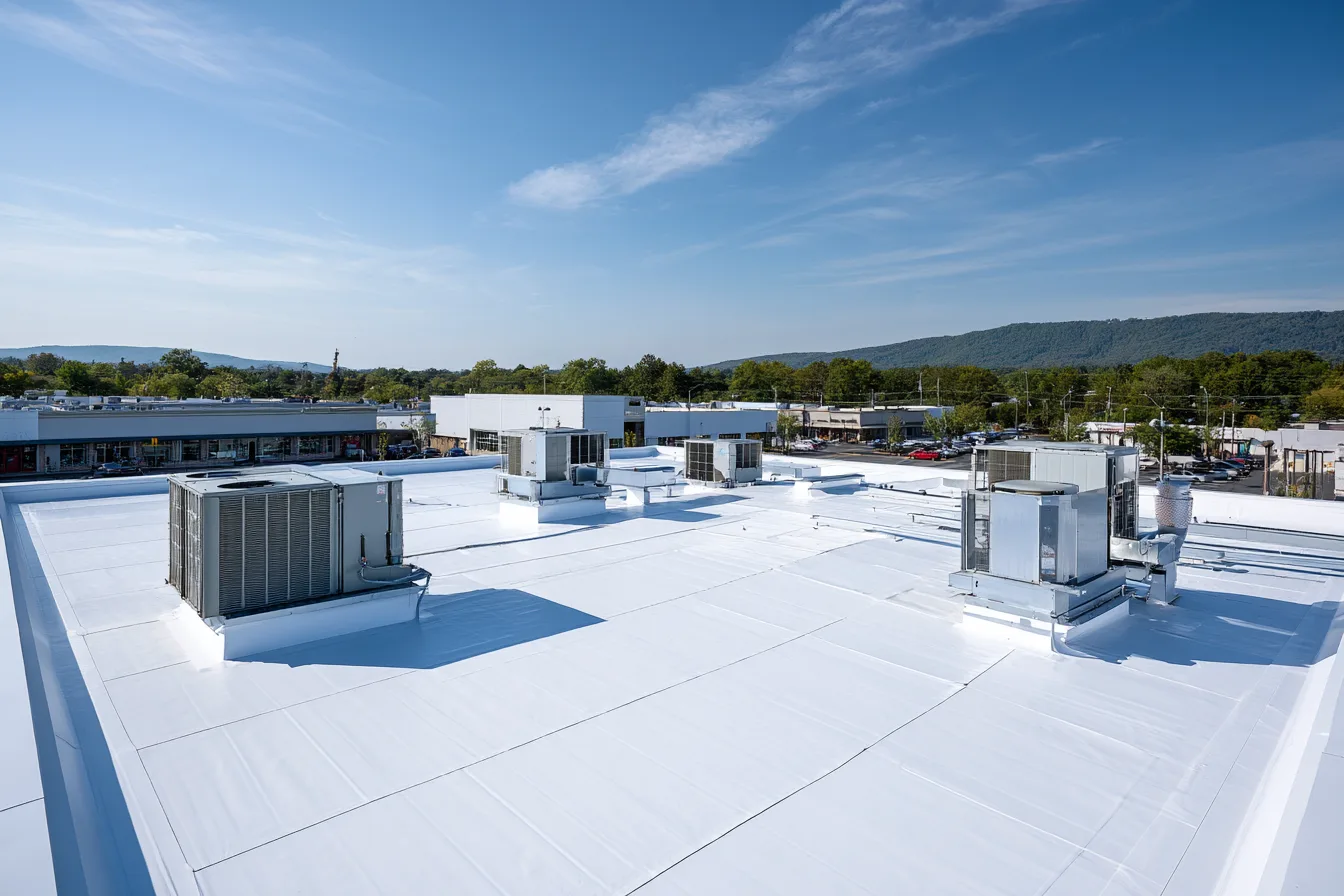
A leak over a work area needs the right roof-side explanation. At a rooftop unit, we consider the curb flashing, membrane terminations, nearby seams and the way water drains around the equipment. The visible drip is only one point in that path.
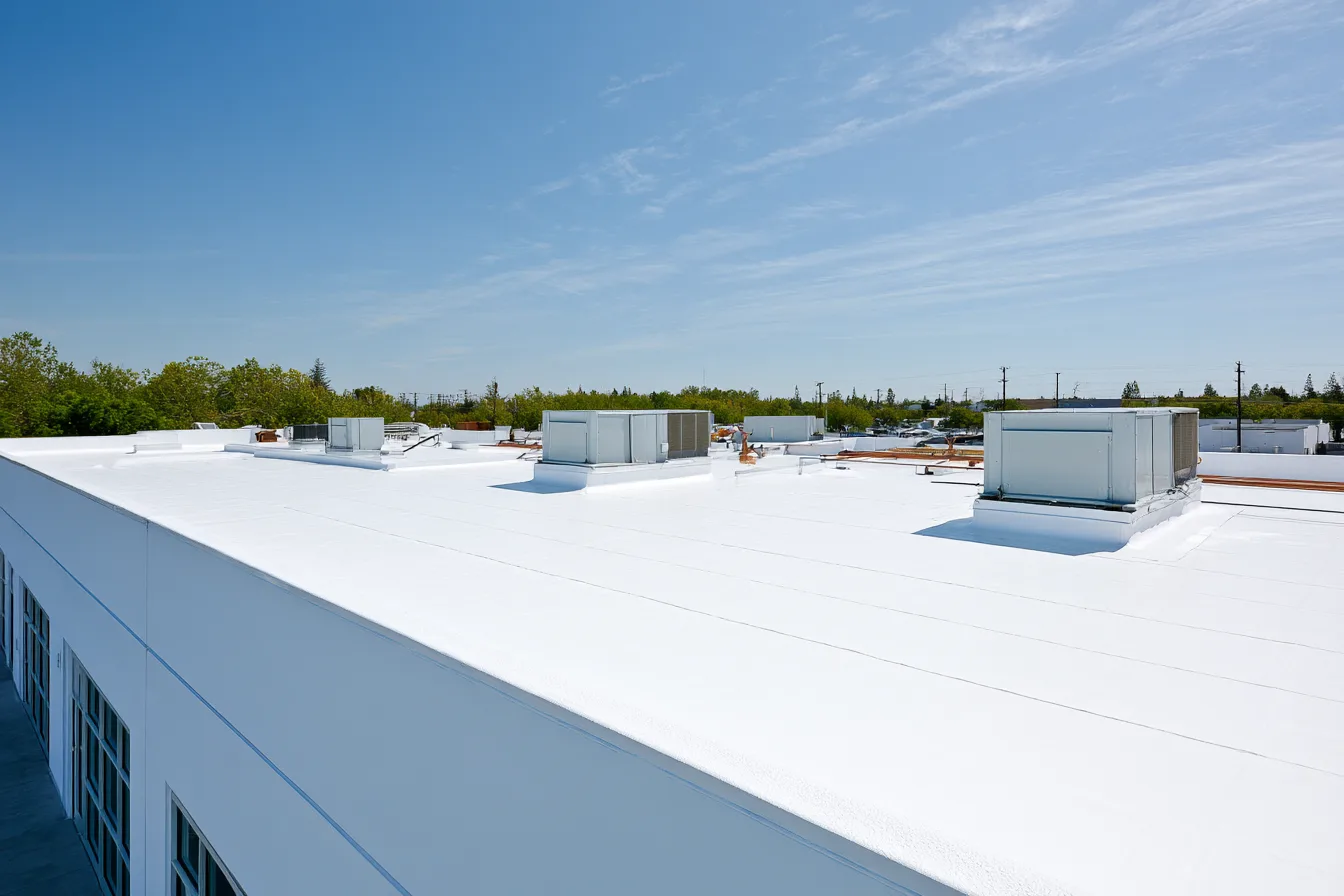
The next decision depends on what remains sound. A bounded defect can support repair. A dry and suitable existing system can support compatible restoration. Wet insulation, failed attachment or deteriorated support can require removal and a wider replacement scope. Coating a surface does not dry the layers underneath.
| Option | A useful candidate | What changes the answer |
|---|---|---|
| Repair | A specific failed seam, puncture or flashing detail with suitable adjoining material. | Moisture beneath the surface, widespread damage or incompatible past patches can widen the work. |
| Coating / restoration | A dry, sound, compatible roof after preparation and detail repairs. | Poor adhesion, wet insulation, deteriorated support or unresolved drainage needs other work first. |
| Recover | A suitable existing assembly that can support an additional roof system. | Layer limits, load, attachment, moisture and applicable requirements must be resolved. |
| Replacement | An assembly whose condition no longer supports the narrower options. | Removal, deck repair, insulation, drainage and equipment details become part of the project. |
Heat-welded seams, reinforced details and attachment form a connected single-ply system.
Explore this serviceRubber membrane repairs need compatible products, prepared seams and sound flashing.
Explore this serviceReinforced asphalt sheets rely on their laps, flashings and suitable installation method.
Explore this serviceRestoration starts with roof suitability, dry layers, adhesion and drainage.
Explore this serviceTrace the opening through seams, drains, penetrations and the condition underneath.
Explore this servicePlan removal, deck and insulation work, drainage and equipment coordination.
Explore this serviceA roof project needs an access route, room for materials and debris handling, and protection around entrances. Tell us about deliveries, tenant spaces and restricted areas.
Rooftop units, piping and curbs can require coordination with other trades. The roof detail must reconnect after equipment work rather than being left as a separate problem.
The sequence of opened and completed areas matters. Building use, weather and the condition found during removal shape the working plan without guaranteeing uninterrupted operations.
No. A coating is a restoration option for a suitable assembly after preparation and repairs. It does not correct wet insulation, failed support or an unsuitable underlying roof.
Yes. Share the building use, roof concern and who can arrange access. The existing system and occupants determine the next discussion.
System area, attachment, insulation and moisture condition, deck work, drainage changes, rooftop equipment and access affect the scope. A generic residential rate does not describe that work.
Tell us how the building is used, where the problem appeared and who can arrange access.