Gutters and supports
Loose hangers, separated joints and damaged runs need a scope that restores the drainage path.
Keep runoff moving from roof edges through gutters, outlets and downspouts with a scope suited to the actual water path.
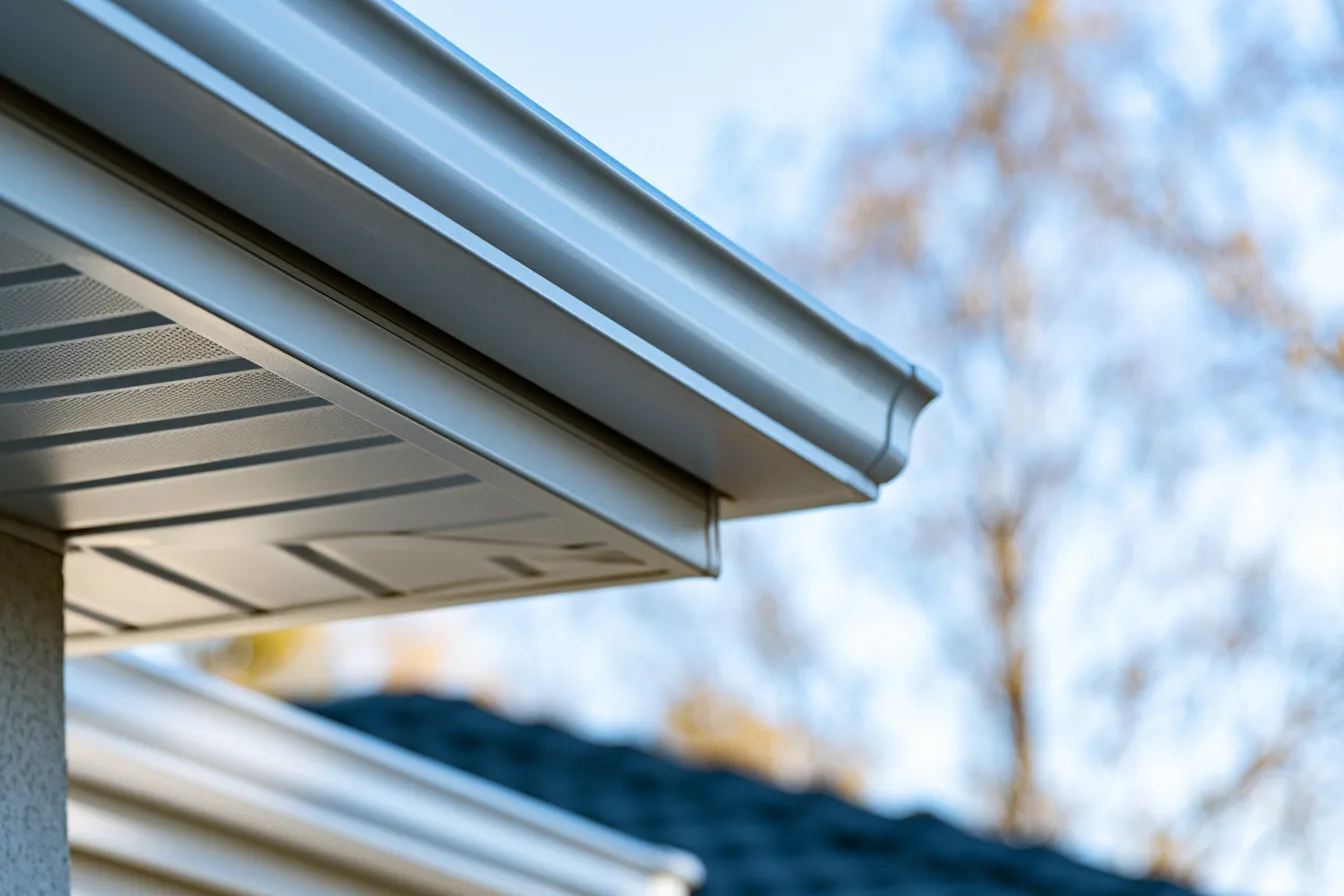
A gutter catches roof runoff and carries it toward an outlet. Slope, supports, joints and downspout routing all affect whether that water leaves the roof edge as intended. Overflow can come from debris, an unsuitable outlet arrangement or a damaged connection.
Gutter work and roof repair meet at the edge, but they are not interchangeable. A failed shingle or wall flashing can admit water even when the gutter is clear. We consider the source before treating gutter replacement as the answer to an indoor leak.
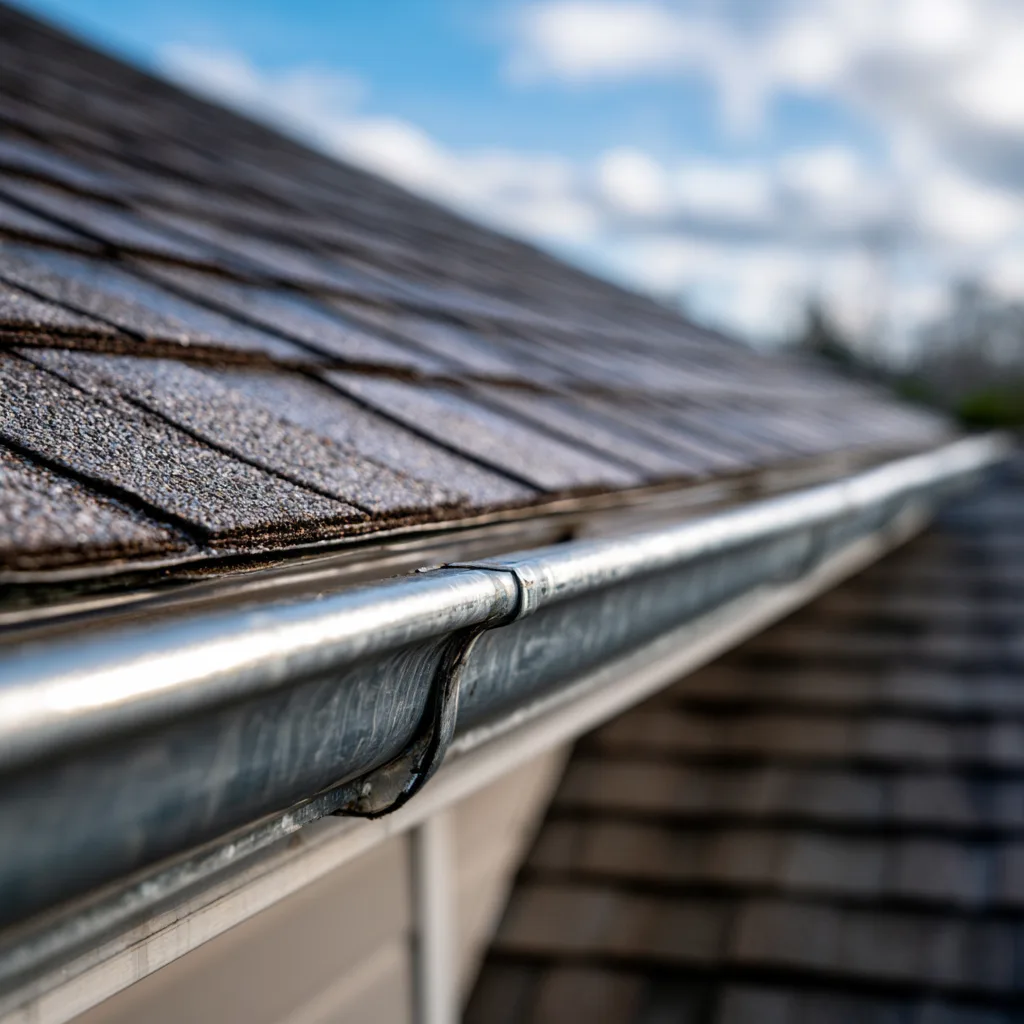
Loose hangers, separated joints and damaged runs need a scope that restores the drainage path.
The roof area feeding a run and the available discharge route shape the arrangement. Water should not simply be moved to another damaging location.
Edge metal, fascia condition and runoff direction need consideration with the gutter. Deteriorated support may require separate repair.
The actual property determines the work. Request a free inspection with the location and concern you already know.
| Scope factor | What it changes |
|---|---|
| Length and access | Measured runs, roof height and access determine setup and material. |
| Outlets and routing | Corners, downspouts and a suitable discharge path add details beyond straight gutter length. |
| Underlying support | Damaged fascia or edge components need attention before new gutters are secured. |
No. It addresses blockage, but damaged runs, unsuitable slope, outlets or discharge arrangements can need other work.
Overflow or poorly connected edge details can direct water where it should not go. The roof edge and gutter should be assessed together.
Yes. When runoff or edge conditions need work, it can be coordinated with the roof scope.
Share the property location and what you noticed. Start with a free roof inspection.