Find the interrupted surface
Seams, punctures and flashing around equipment each need their own repair detail. Existing patches help explain what must reconnect.
Trace water through low-slope seams, equipment details, drains and the condition beneath the surface.
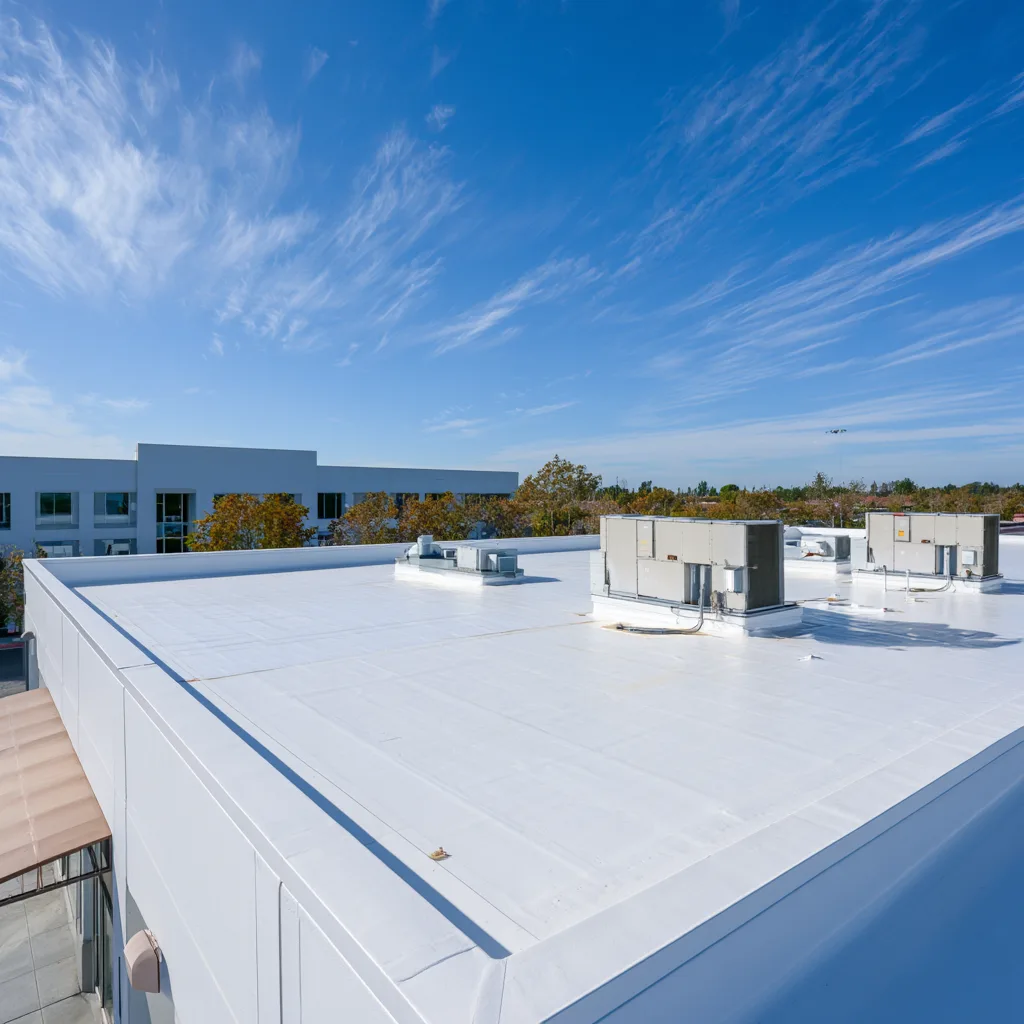
A low-slope roof can carry water away from the indoor drip before it enters the building. We examine the membrane or sheet system, penetrations, curbs, edges and drains to find the failed connection. A patch directly above the wet room can miss the entry point.
The repair needs compatible material and a sound assembly. Wet insulation or deteriorated decking can widen a small visible defect. Drainage is part of the assessment too: restoring a seam while water remains trapped by an unresolved outlet problem leaves a different roof concern in place.
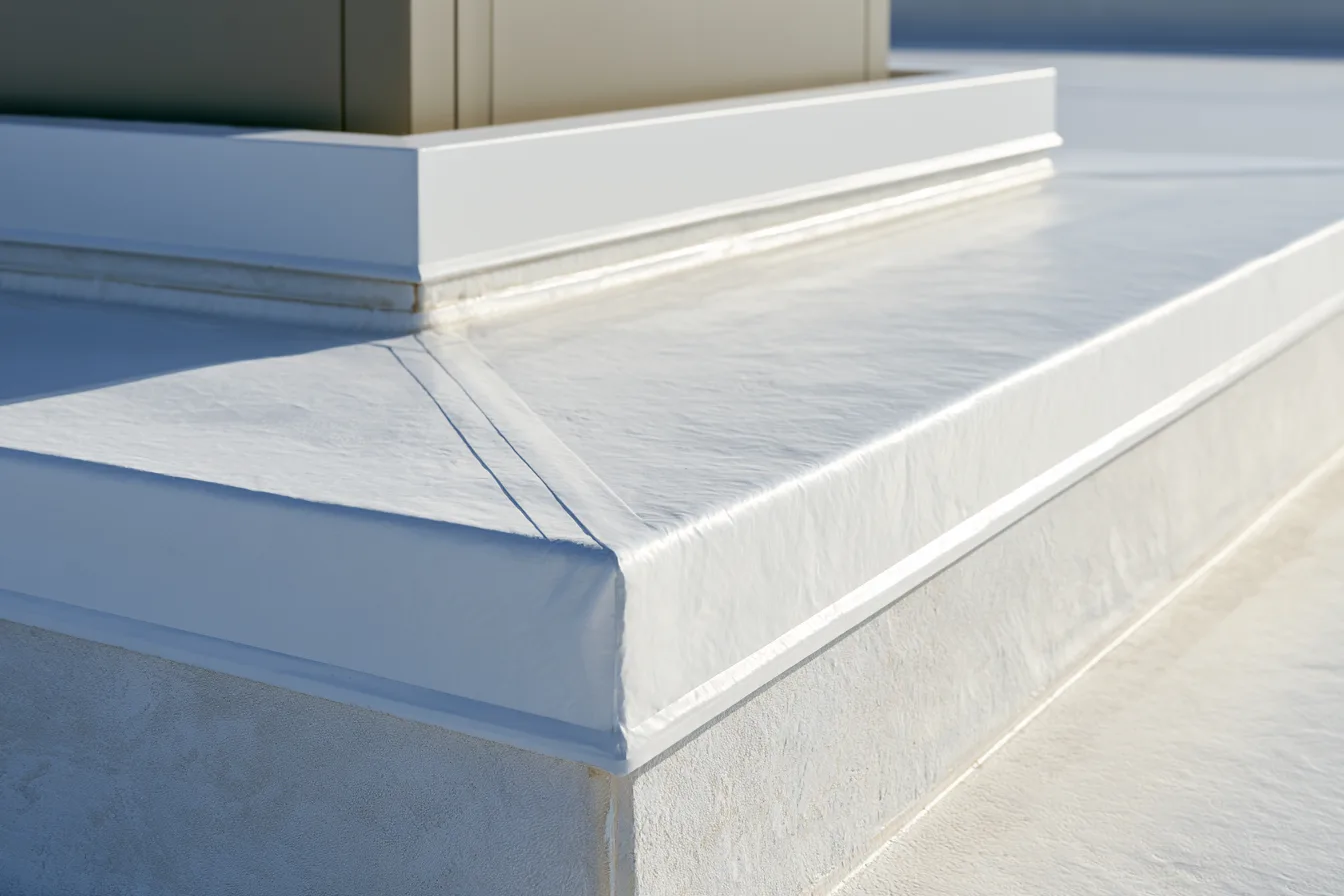
Seams, punctures and flashing around equipment each need their own repair detail. Existing patches help explain what must reconnect.
Drains, scuppers and flow paths are considered with debris and local roof shape. Changing slope or outlets is different from patching a membrane.
Damaged support or moisture needs attention before the repaired surface can perform as intended.
Roof area, attachment, insulation, access and discovered support damage change the price. The commercial roofing hub explains the related systems and work choices.
| Condition or choice | How it changes the work |
|---|---|
| A bounded defect | Repair can remain local when the surrounding material and layers are suitable. |
| Repeated leaks | Several failed connections or widespread wet layers warrant a broader system discussion. |
| A worn assembly | The commercial replacement service explains removal, insulation, drainage and equipment coordination when repair is no longer enough. |
Yes. Low-slope roofs still need drainage toward outlets. “Flat” does not mean water should remain without a working drainage route.
It repairs the specific surface detail. An obstructed outlet or an unsuitable drainage arrangement needs its own correction.
Share the building use, roof concern and access arrangement. Start a conversation about the actual property.